

Design for Democracy
When the framers of the Constitution, including Rufus King, gathered in 1787 to shape the new nation's government, they looked to the democracies of ancient Greece and Rome for inspiration. Their influence extended beyond government and law to architecture, furniture, fashion, and decorative arts. Many believed that the environment people lived in shaped their values and character. By surrounding themselves with designs inspired by ancient democratic societies, Americans hoped to encourage ideals of reason, civic participation, scientific inquiry, and republican government.
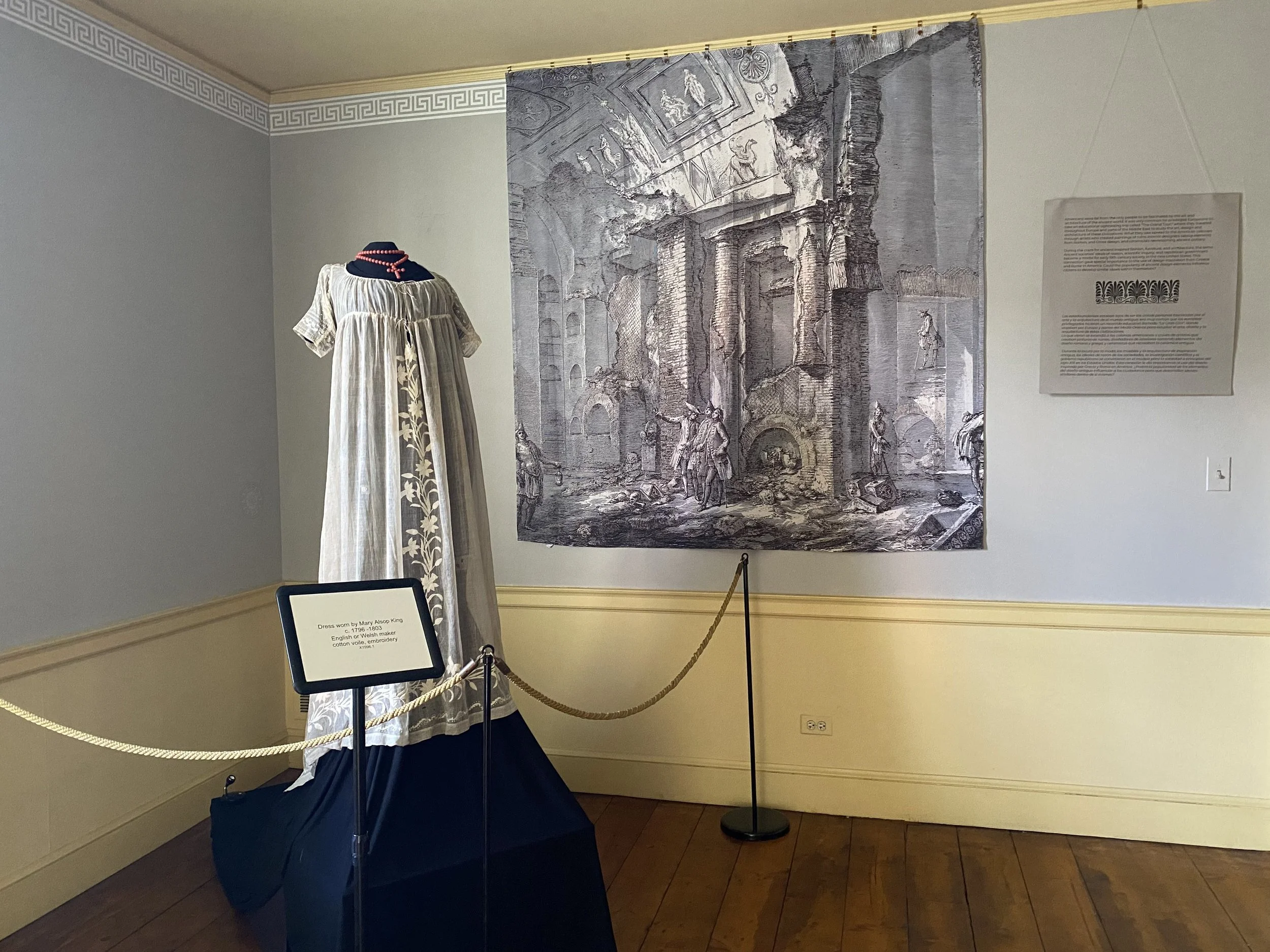
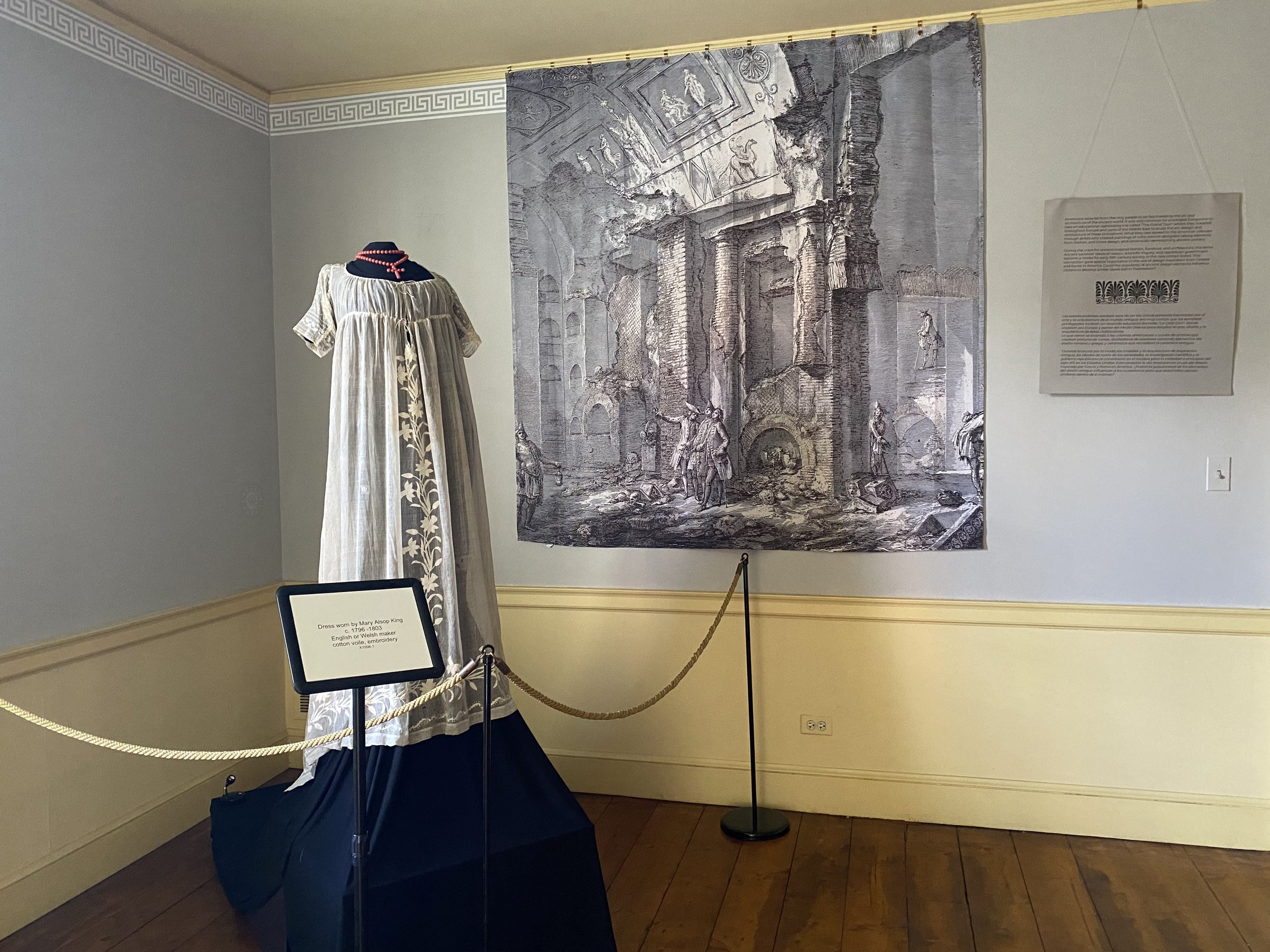
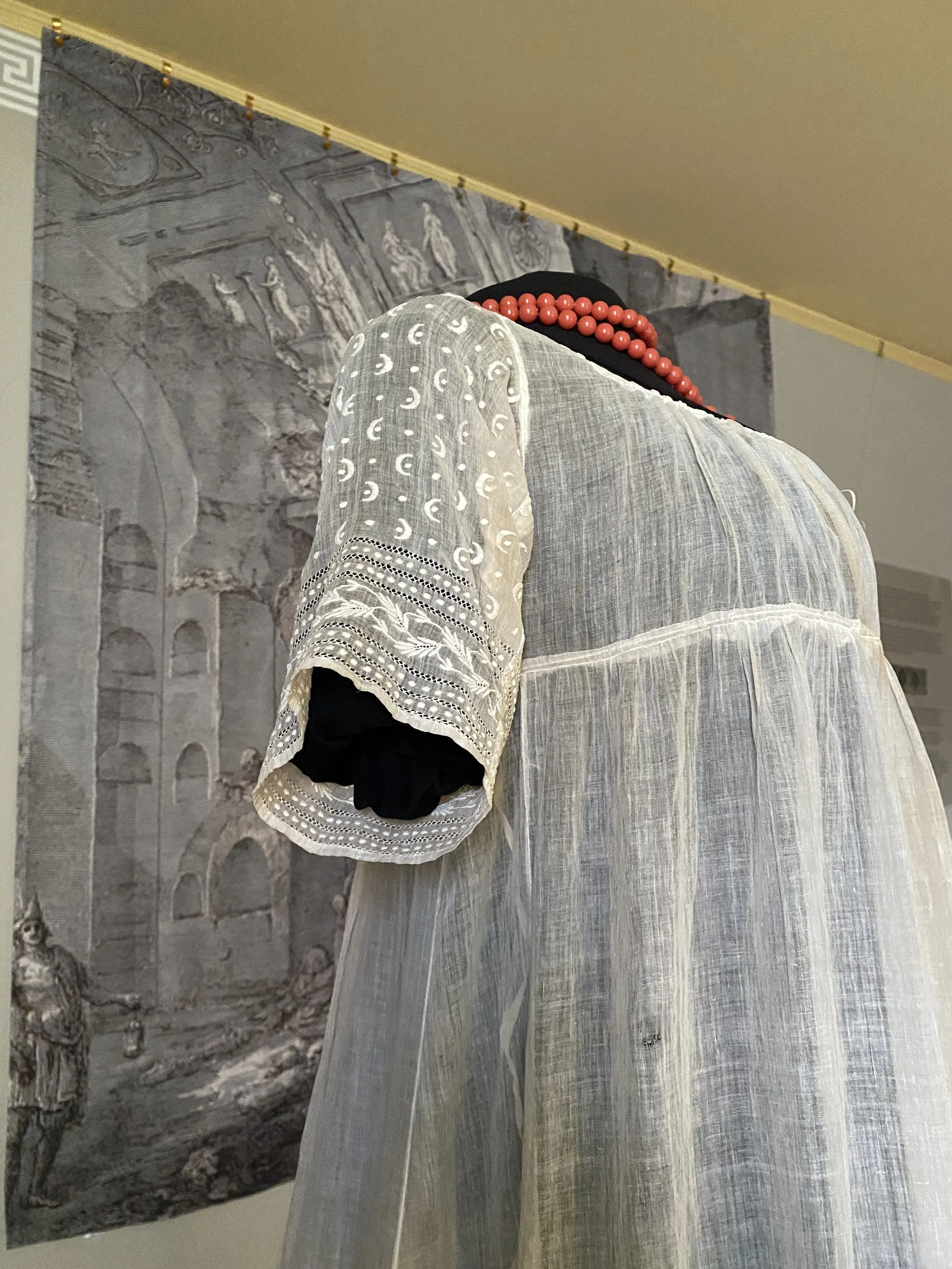
The objects in this exhibition explore how classical design became woven into everyday American life, from politics to personal style. A highlight is Mary Alsop King’s elegant gown, inspired by the fashions of ancient Rome, illustrating how the classical world influenced both public ideals and private expression.
Sculpture
Fashion
Home Furniture
Decorative Arts
Sculpture
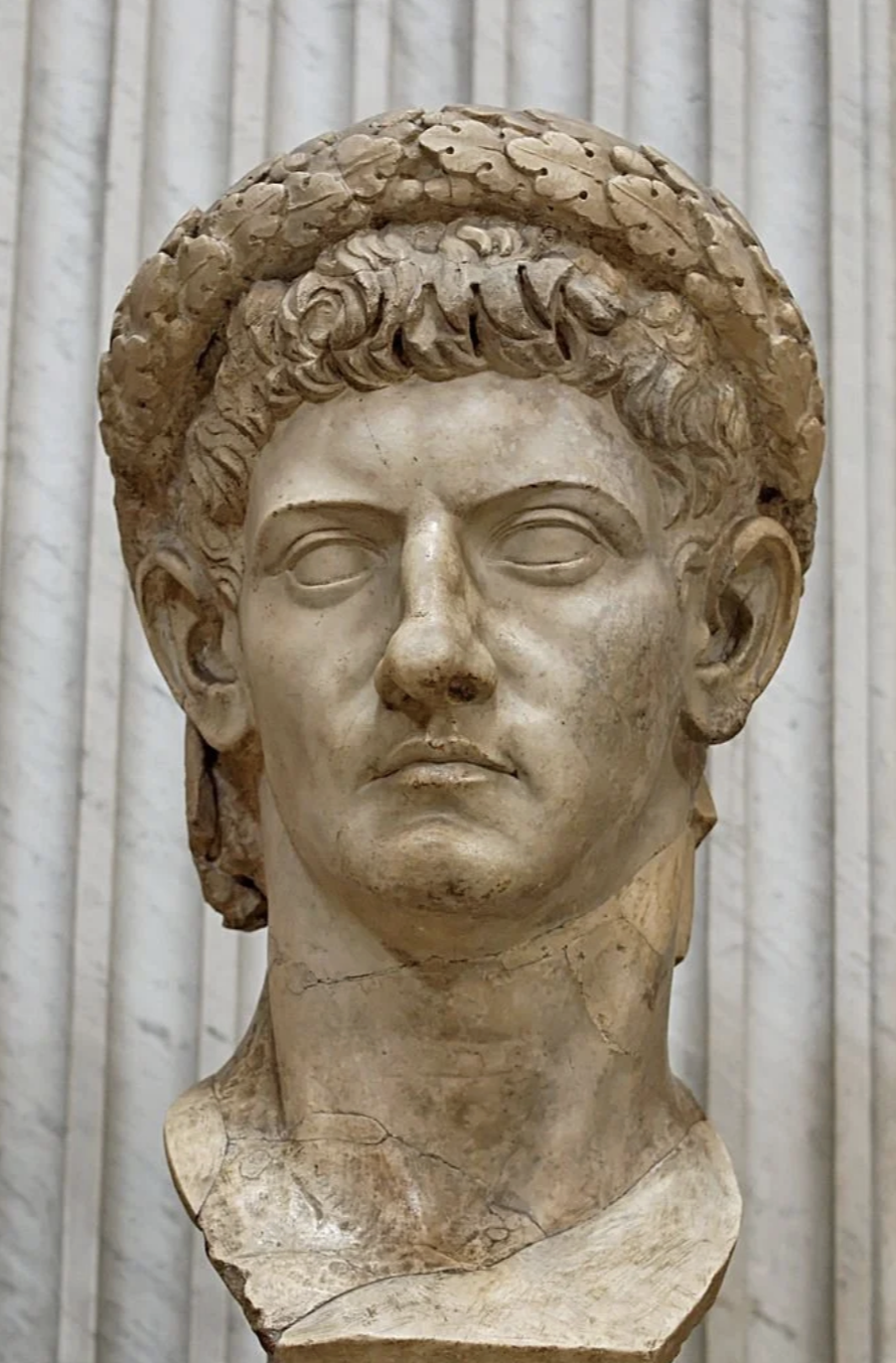
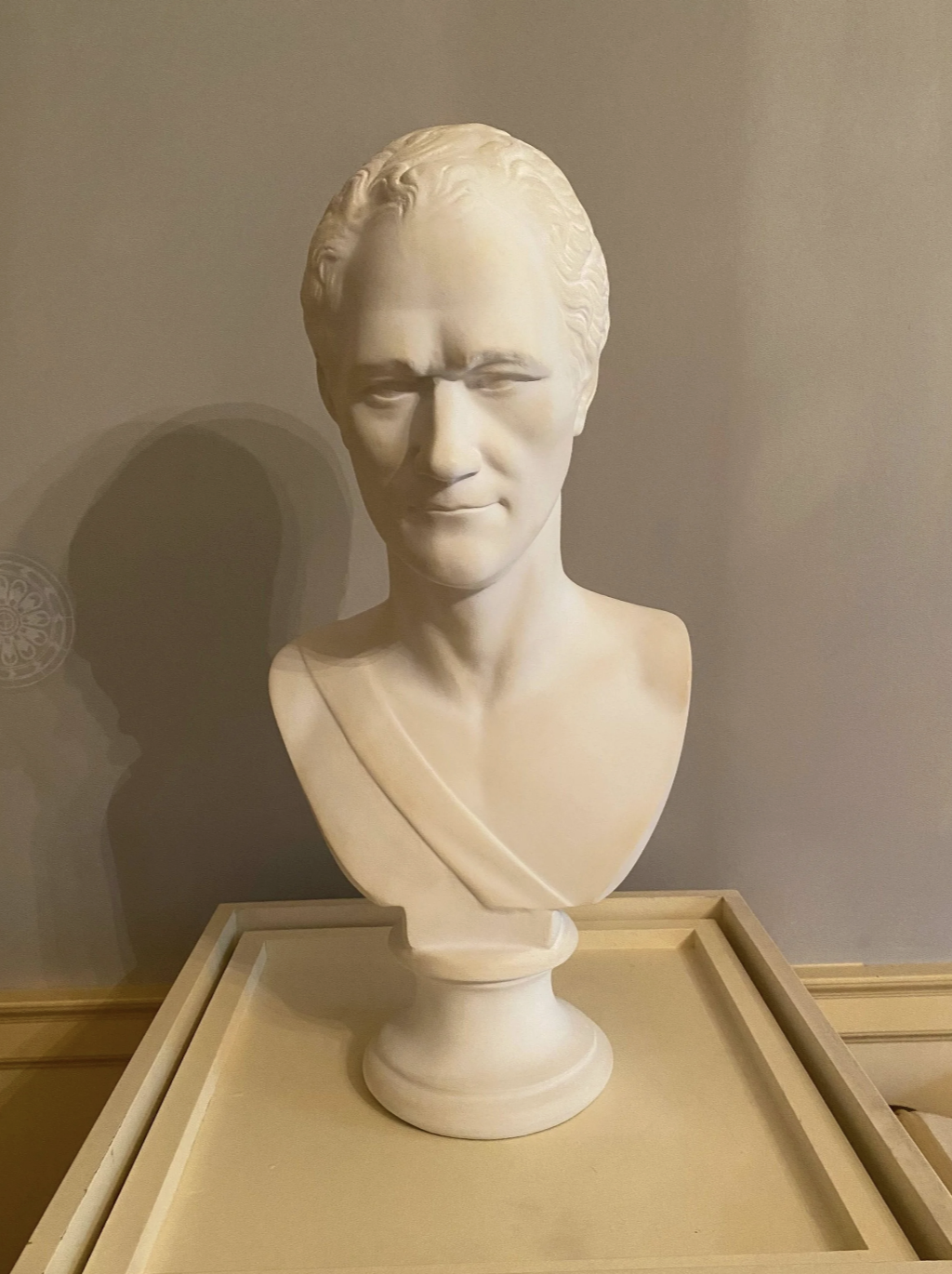
Busts and statuary of the period also looked to the ancient past for inspiration. Roman statuary often depicted the likenesses of great emperors and conquerors; therefore, it is understandable that contemporary statues of the period would seek to honor their American counterparts, democratic politicians.
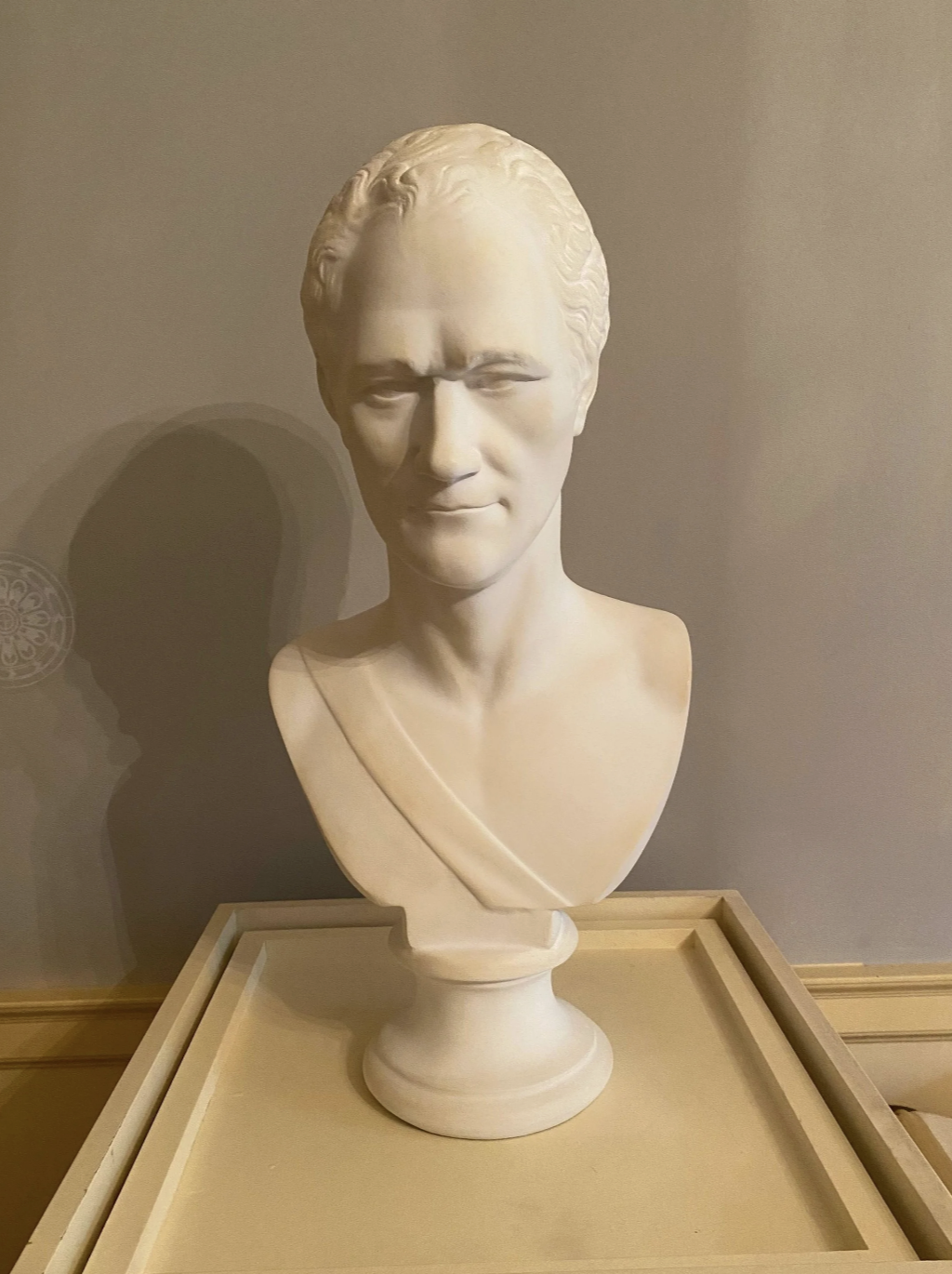
Rufus’ home at King Manor honored this tradition in that it contained a bust of his politically important friend Alexander Hamilton. The bust of Hamilton featured in the exhibit would have been similar to one Rufus owned. Hamilton’s short hairstyle is meant to evoke an ancient Roman style.
Americans were far from the only people to be fascinated by the art and architecture of the ancient world: it was very common for privileged Europeans to take an educational sightseeing trip called “The Grand Tour;'' where they traveled throughout Europe and parts of the Middle East to study the art, design, and architecture of these civilizations. What they saw spread to the American colonies through artists who created paintings of ruins, interior designers taking elements from Roman and Greek design, and ceramicists reenvisioning ancient pottery.
Fashion
The power of design to influence the way we think about ourselves and about the world is just as powerful now as it was during Rufus King’s lifetime. Although we no longer wear dresses that look like something straight out of an ancient Roman painting, inspiration from the past has shaped much of the domestic and governmental architecture we still see today. For example, bank buildings or local government buildings often use design elements like columns to create a signal, though probably a subconscious one, that these are places of authority. Even Wendy’s used until recently a slab-serif font that evoked the comfort of a “simpler time” to sell “old-fashioned hamburgers”, as a way of setting their quality apart from other fast-food chains.
In what other ways does design shape the way we perceive the world around us?
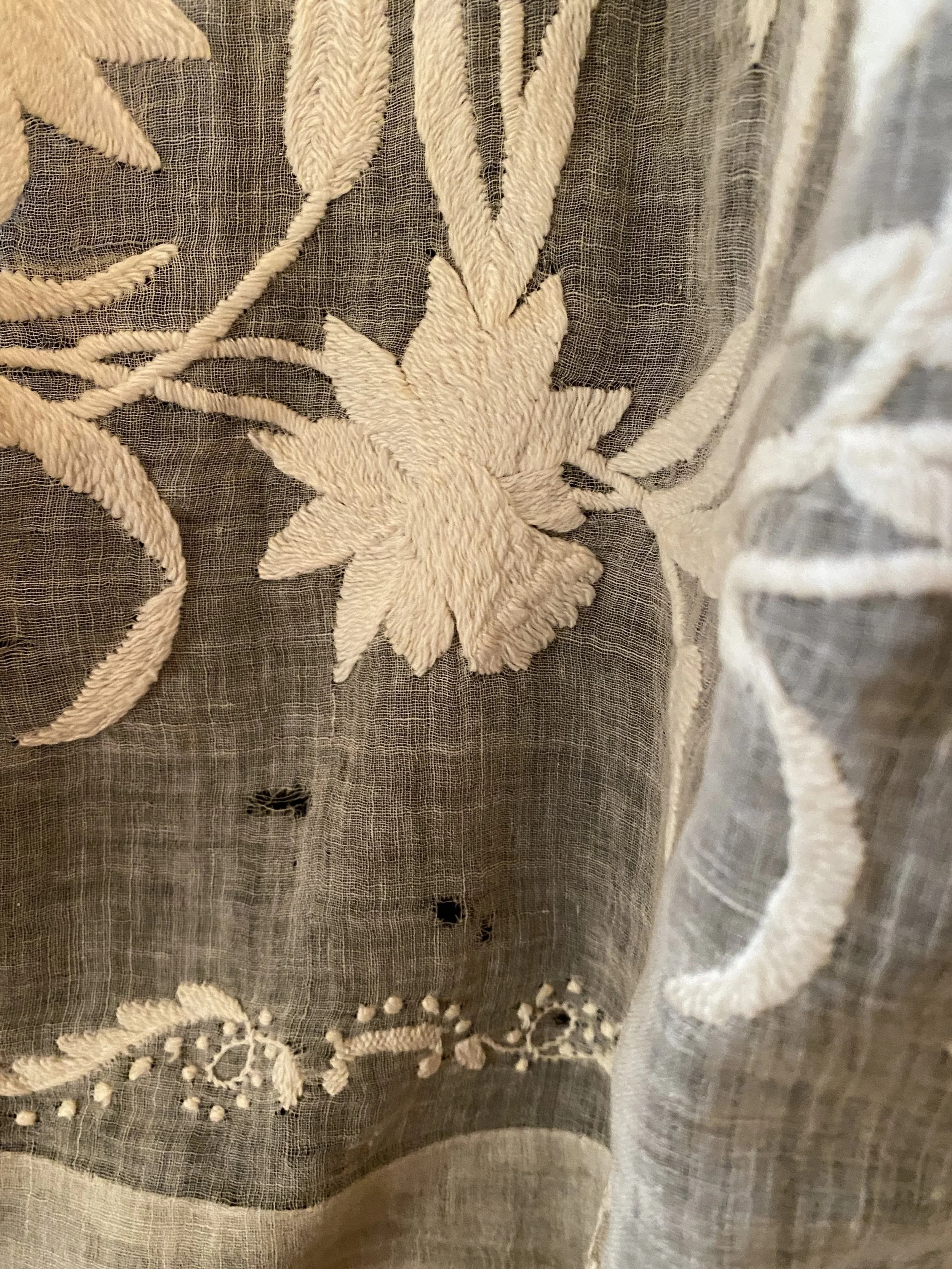
English or Welsh maker, ca.1796 -1803. Cotton voile, embroidery. King Manor Collection. X1996.1
Use the interactive image to explore the details of Mary Alsop King’s dress, recently restored and conserved. Design for Democracy is the first time this beautiful example of early 19th century fashion has been publicly displayed.
Mary Aslop’s Dress
Home Furniture
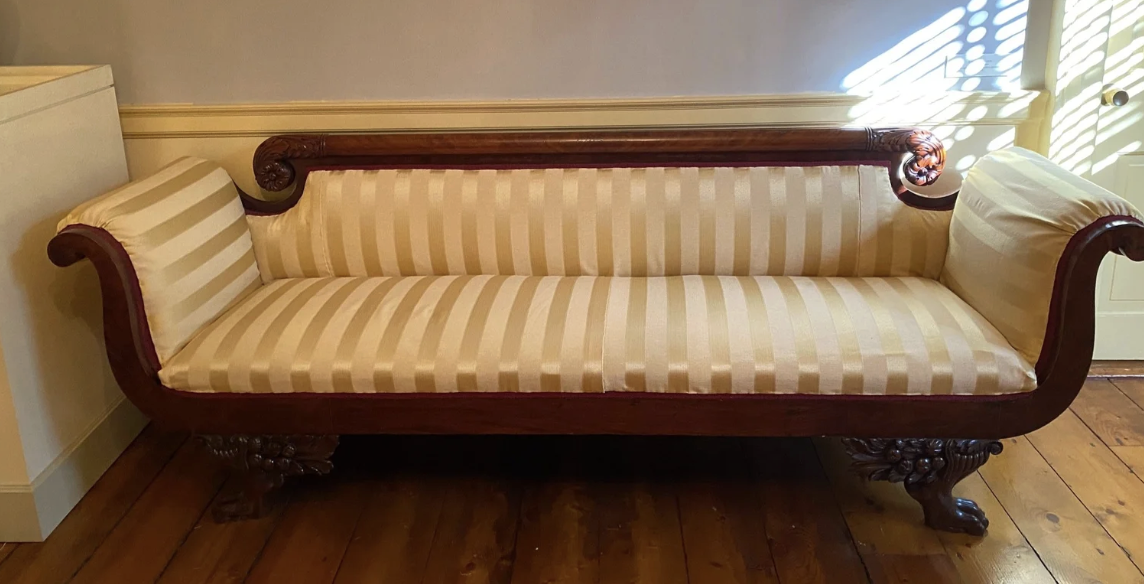
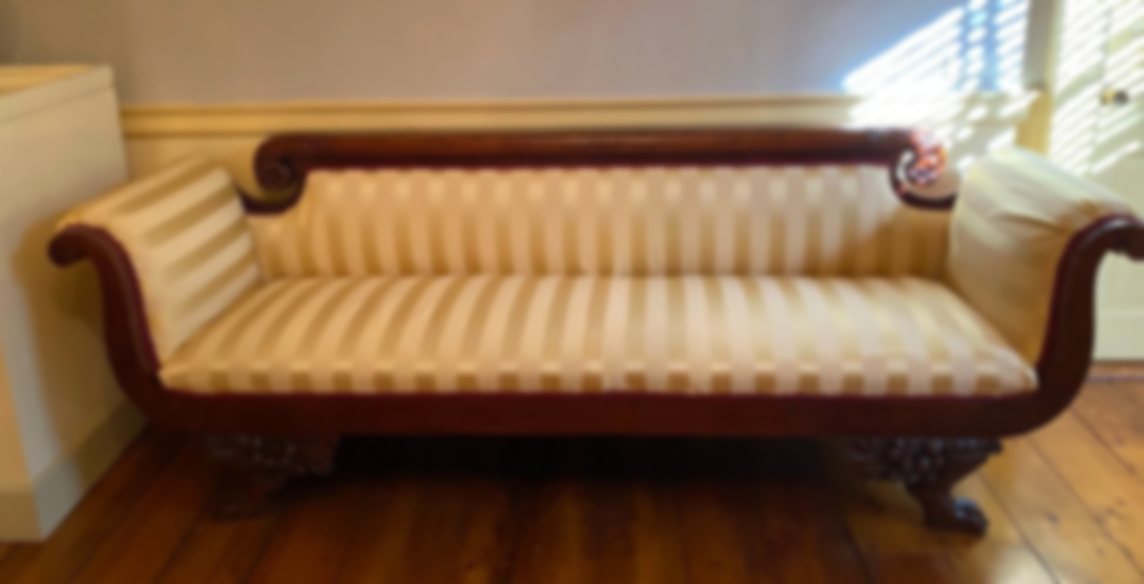
Sofa (1820-1830, maker unknown)
This sofa has many elements found in classical design that re-emerged in popularity in the first quarter of the nineteenth century. By the 1820’s and 1830’s, a style called the Greek Revival became popular in America. As opposed to directly copying classical models like the earlier neoclassical style, the Greek Revival took elements of ancient Roman and Greek design.
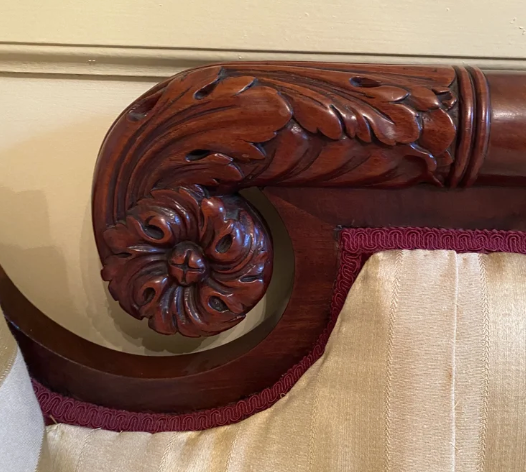
Furniture featured ancient motifs such as acanthus leaves, the mythical animal the sphinx, as well as stylized garlands of flowers and plants called festoons and laurel wreaths.
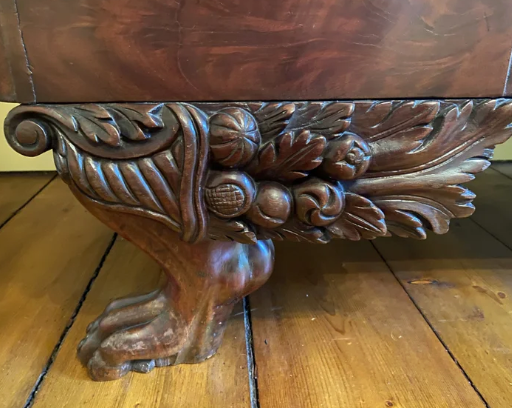
The wooden feet on each side of the sofa are carved like a lion's paw, another popular motif in Grecian design. They are each attached to a sculpted triangular cornucopia horn lying on its side. Cornucopia translates to “horn of plenty,” which, according to Greek mythology, was how the god Zeus was fed as a baby.
This sofa takes inspiration from ancient Greece. Its shape is linear and simple, reflecting architecture and furniture forms found in Greek antiquity. Although the backboard’s wood is plain and smooth, its form ends in a noticeable Greek motif; the acanthus leaf, carved and curling on each end.
Compare and contrast the motifs on the leg and backboard details with those of ancient Greek and Roman decorative objects.
Decorative Arts
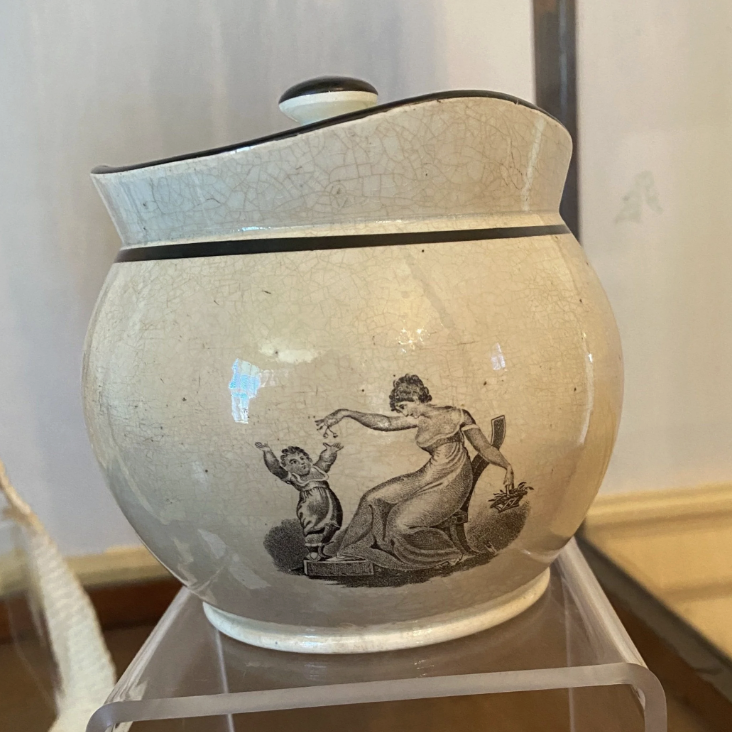
Jar with illustrations after Adam Buck
(c. 1800-1810, maker unknown)
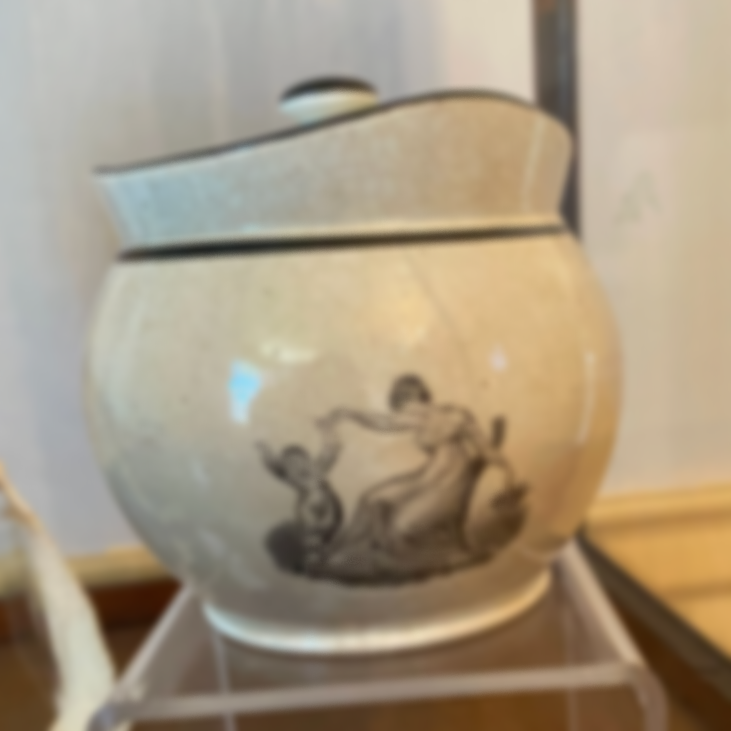
This jar (right) exemplifies how the neoclassical aesthetic extended to the decorative arts. The jar’s illustrations show a woman in the classically inspired neoclassical style, similar to Mary’s dress. This popular dress style was inspired by the female figures found in the carved reliefs and painted frescoes of ancient Greece and Rome.
Although the manufacturer of this particular jar is unknown, its imagery was part of a trend popular in ceramics and other household objects of the period. The illustrations reproduced here were based on watercolors by the Irish miniature painter Adam Buck, who is best remembered for sentimental watercolors of women and children, used to decorate domestic items.
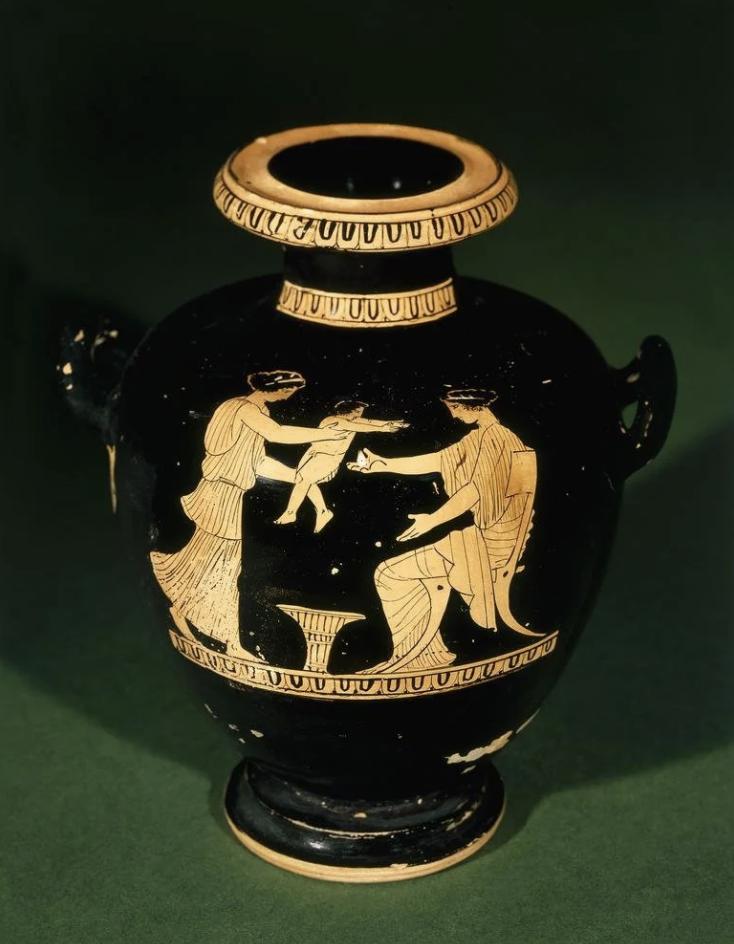
Buck’s work was heavily influenced by the neoclassical aesthetic, inspired by new archeological discoveries like the ancient Roman sites of Herculaneum and Pompeii. The jar’s images show many elements of the neoclassical style, including a Greek klismos chair, a form borrowed from Greek antiquity. The ladies’ style of gown is also inspired by ancient Greek and Roman dress styles. The loose, flowing gowns drape elaborately around their legs, similar to the ancient Greek sculptures of goddesses. The women positioned seated in profile on each side imitate portraits found on Greek vases and Roman coins. A Greek example (left) found in the British Museum’s collection shows a similar scene of a mother and child, although in this scene the mother hands over the child to a wet nurse.