

Exhibitions
King Manor is open to the public on:
Tues-Sat: 12pm - 4pm (reservation encouraged but not required).
Admission is free to all and all are welcome!
ONGOING

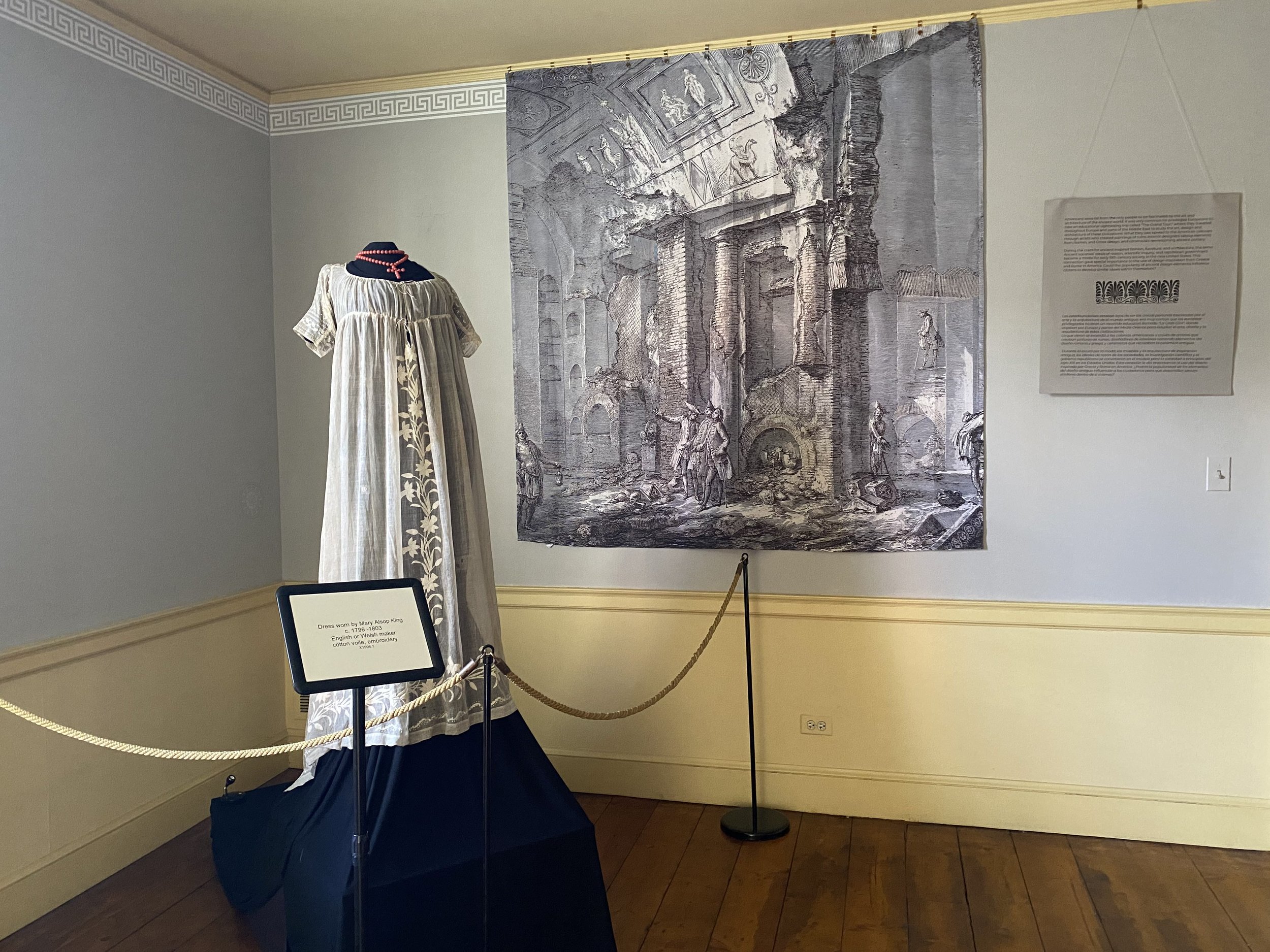
What is America? Remembering the Bicentennial
Opening May 2nd 2026
This exhibition explores how Americans interpreted the nation’s founding during the 1976 bicentennial through the material culture of the era. Featuring objects such as printed fabrics, commemorative plates, beer cans, magazines, school yearbooks, underground prints, and protest posters, the exhibition examines the vision of America expressed through both consumer goods and handmade items while highlighting the colorful and eclectic aesthetics that defined the 1970s.
The slogan “The Spirit of ’76” appeared everywhere during the bicentennial, yet the exhibition reveals that there was no single understanding of what 1776 meant in 1976. Just as the Revolutionary Generation held differing views about the future of the new nation, Americans in the twentieth century continually reinterpreted the symbols and language of the American Revolution to address contemporary political and social debates. References to the Declaration of Independence have been used to support a wide range of causes, from expanding civil rights to advocating states’ sovereignty.
Bangladesh Not “Bhaangadesh” বাংলাদেশ, ‘ভাঙাদেশ’ নয়
Opening May 2nd 2026 ২ মে ২০২৬ উদ্বোধন
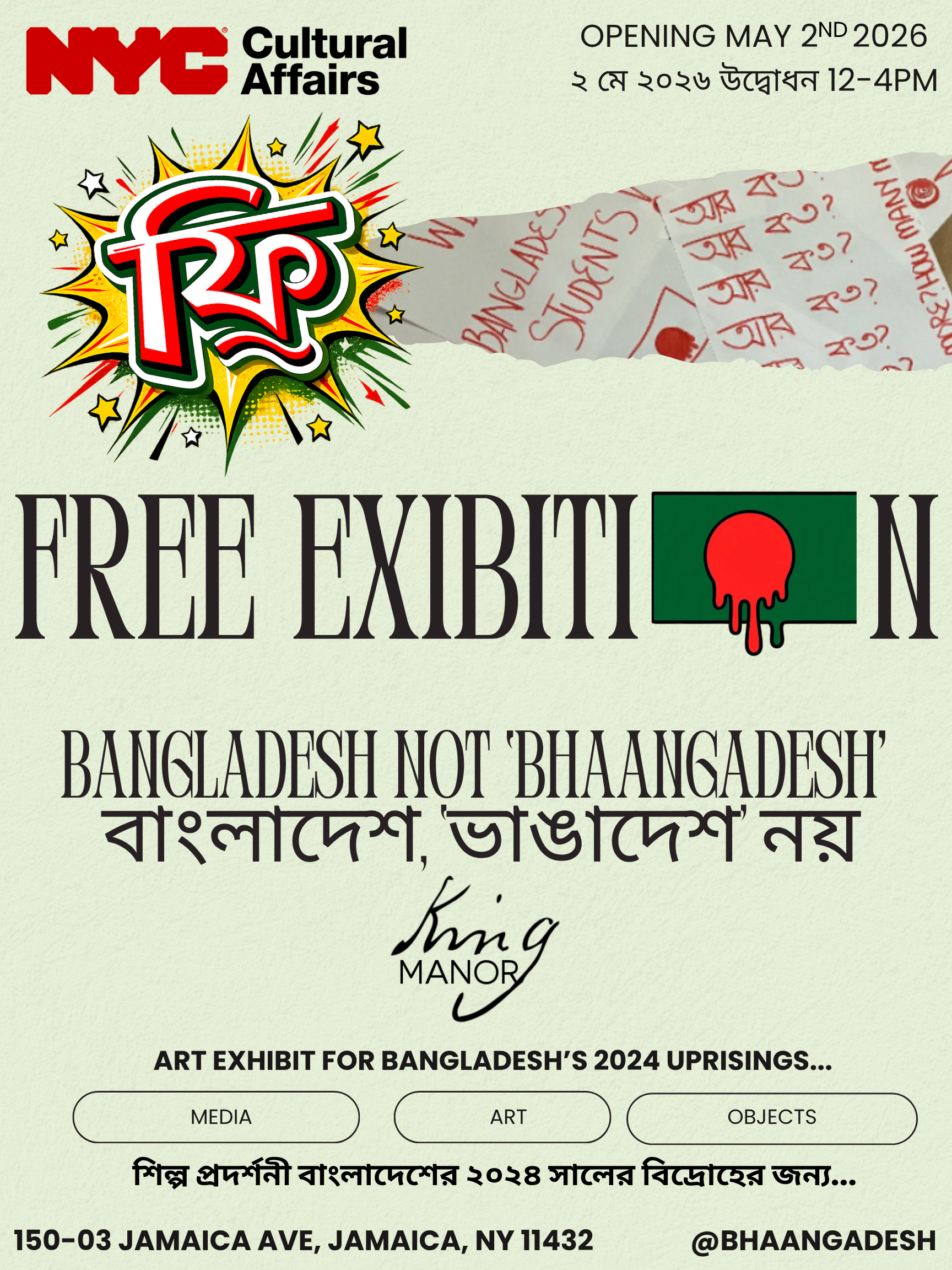
This exhibition explores how Bangladeshis in Bangladesh and beyond took actions during the 2024 mass uprisings against the quota system in place, since 1972, immediately after the birth of the country in 1971. Featuring articles such as printed international artworks by Bangladeshi artists, handcrafted tools, and relevant media, the exhibition serves as a homage to learn, reflect, discuss, and heal.
Bangladesh, Not “Bhaangadesh” seeks to raise social (in)justice awareness through showcasing Bangladeshi artistic expression, and persistent crimes against humanity from the summer of 2024–of government-implemented curfews, with “shoot-on-sight” commands, country-wide internet revoked, houses raids, innocent lives taken, and unnecessary arrests made, etc. After decades of corruption and nepotism, Bangladeshi students stood up against the unjust quota system of prioritizing government positions rather than basing hiring on skill, talent, and merit–for descendents of ancestors prominent in the Bangladesh Liberation War of 1971.
PAST EXHIBITIONS

The Ancestor’s Future: An Afrofuturist’s Journey Through Time
Transfer at Jamaica

Artist and historian Cheyney McKnight’s first solo exhibition featuring her performance pieces, photographs, and clothing designs that are transformed into modern textiles while highlighting the Black experience in America with 18th and 19th-century silhouettes comes to King Manor!
The Ancestor’s Future is a significant exploration of Black America’s past, viewed through the lens of Afrofuturism. McKnight’s work delves into a distant future while drawing on the past and present, illuminating the crucial role of Black bodies, health, and joy. McKnight’s creative practice, rooted in history, offers a fresh and enlightening understanding of our shared history and future.
Jamaica, despite its location at the edge of the outer boroughs, plays a vital role in the New York transportation network, well-known to anyone who has ever had to “Transfer at Jamaica!” on the Long Island Railroad!
This exhibit explored how this Transportation Revolution impacted life here in what was once a small farming village and how our community’s development continues to be shaped by its relationship with transit. Our neighborhood is a priority area for infrastructure modernization in city planning -looks like we’re about to see a second “Transportation Revolution” here in Jamaica!
JAMAICA | JAMAICA
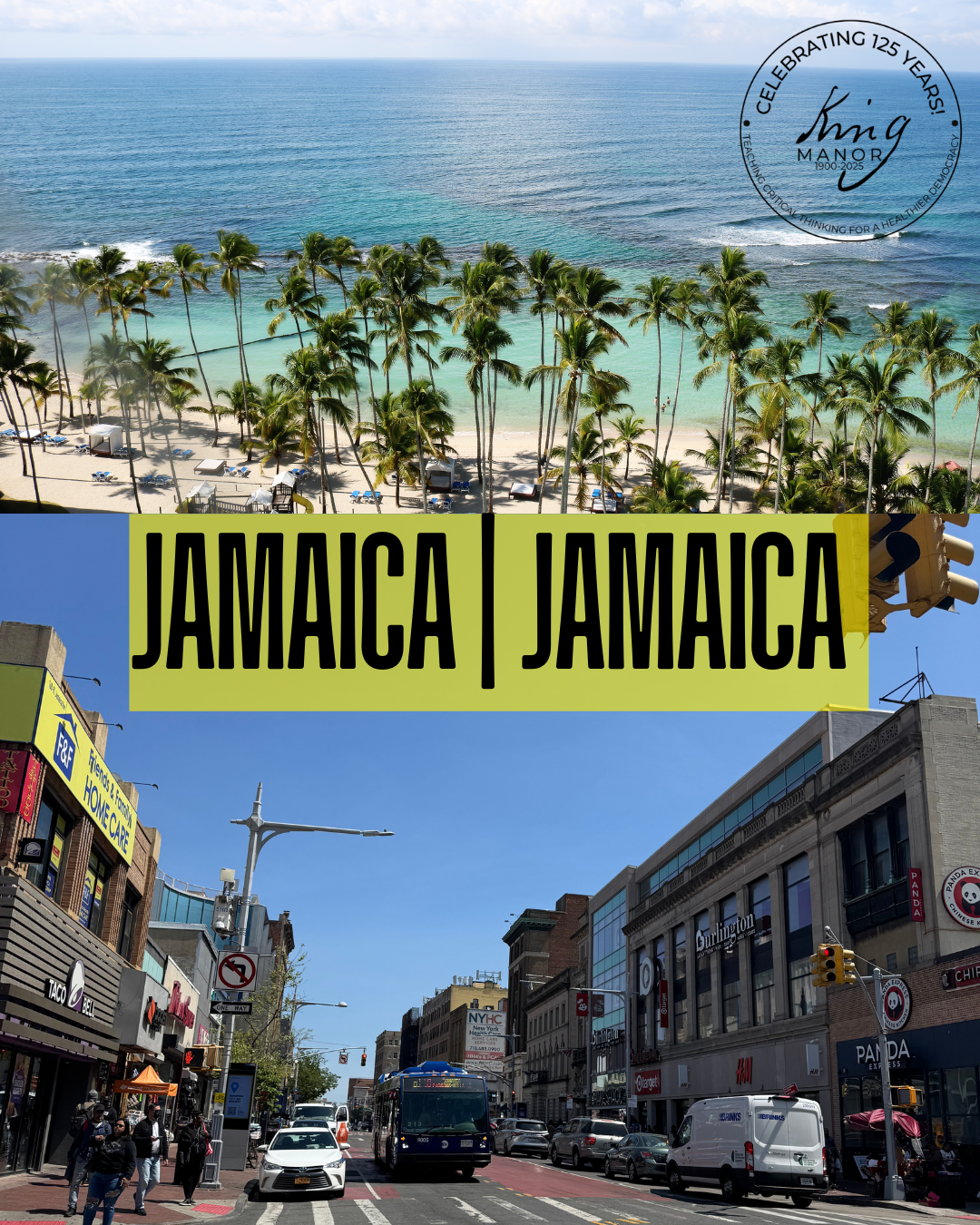
Taking inspiration from the Jamaican national motto, “Out of Many, One People,” the exhibition highlights the country’s rich and diverse heritage—mirrored in the vibrant culture of Southeast Queens. Jamaica | Jamaica explores the history of Jamaican immigration to New York City and the lasting impact of Jamaican culture on the local community.
From the deep roots of reggae and dancehall echoing through local sound systems, to the unmistakable aroma of jerk chicken wafting from food carts and restaurants, Jamaican culture has become an essential part of the neighborhood’s identity.